
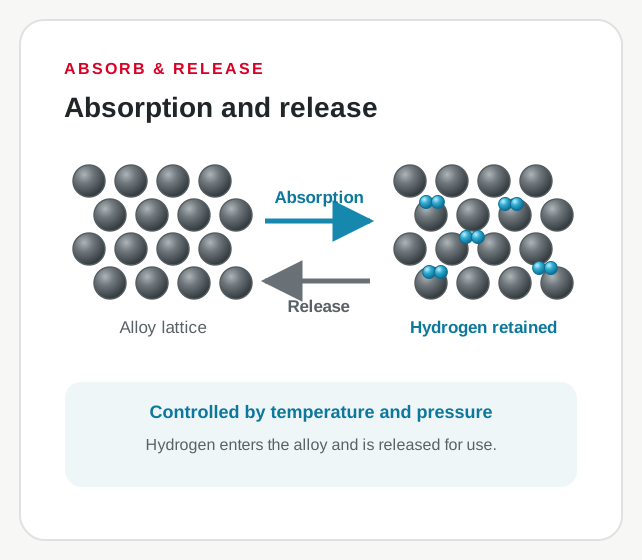
Hydrogen is absorbed at appropriate temperatures and pressures, and retained as a metal hydride.
HYDROGEN CARTRIDGE SAFETY
Metal Hydride Cartridges:
Technology & Safety
Hydrogen held within an alloy,
released when needed.
Learn about the metal hydride structure, how hydrogen is absorbed and released, and key safety points to check before use.

MECHANISM
Metal Hydride
Cartridge Overview
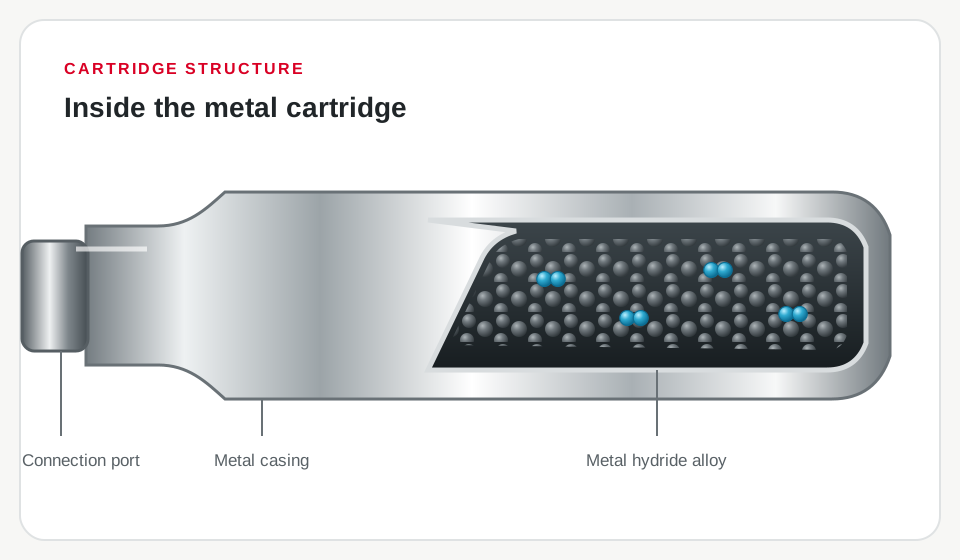
These cartridges use metal hydride (MH) alloys to absorb and retain hydrogen within the alloy. This storage method differs from compressed hydrogen gas or liquid hydrogen.
Increasing the temperature or reducing the pressure causes hydrogen to desorb from the alloy.
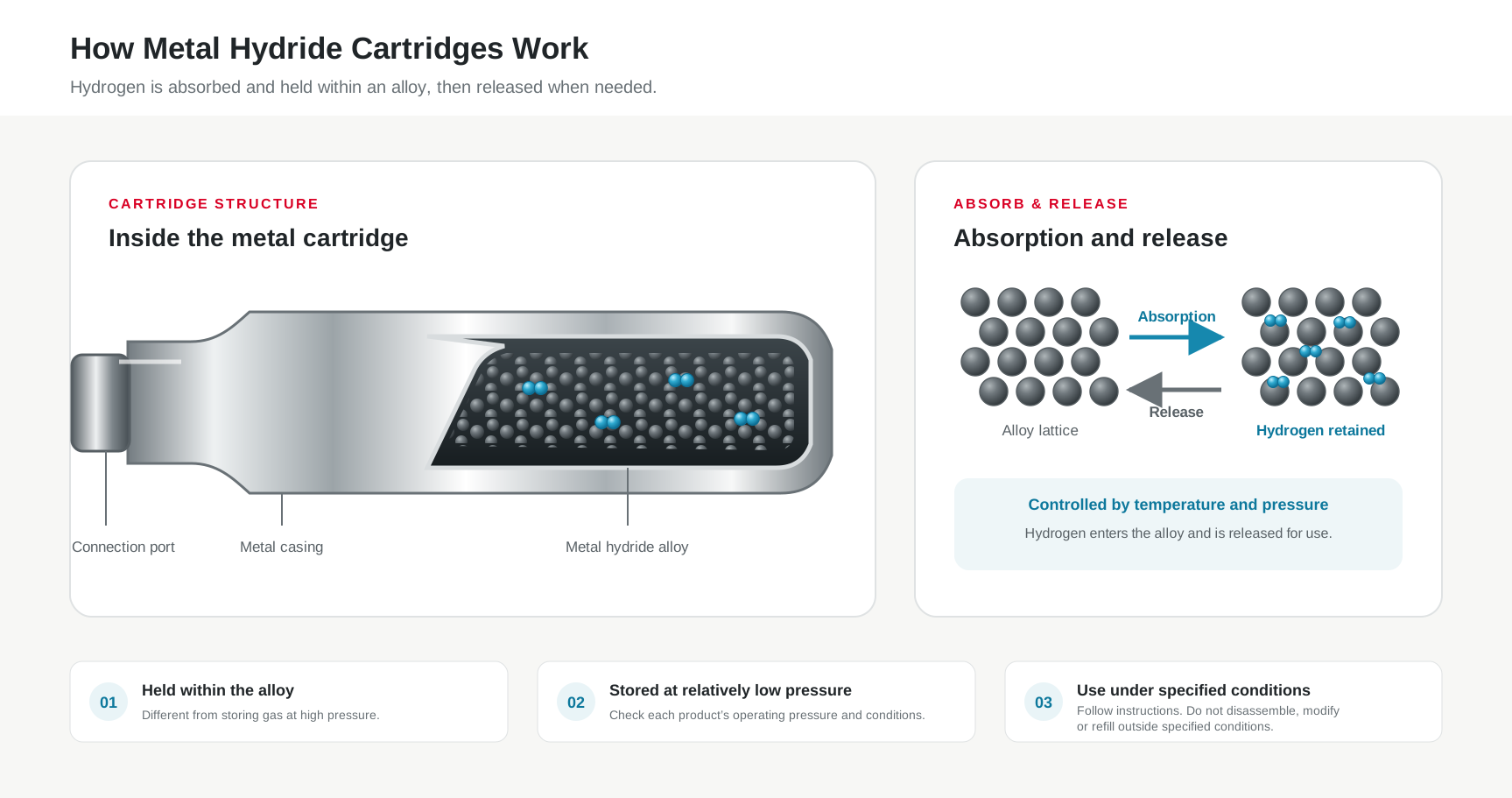
- 01 Held Within the Alloy Different from storing gas under high pressure
- 02 Stored at Relatively Low Pressure Check operating pressure and conditions for each product
- 03 Handle Under Specified Conditions Follow instructions; do not disassemble, modify or refill by unauthorized methods
Select any diagram to enlarge it.
HYDROGEN STORAGE
How Hydrogen Is Stored
Hydrogen is absorbed into the metal alloy inside the cartridge and retained within its lattice structure. During use, it desorbs and is supplied to compatible equipment.
Filled with Metal Alloy
The cartridge contains a metal hydride alloy that absorbs and retains hydrogen.
Chemical Absorption at Low Pressure
The explanatory materials describe hydrogen reacting with the alloy at a controlled temperature and low pressure (0.1–1.0 MPa), becoming chemically absorbed into the metal. Check each model's specifications for actual operating pressures.
Retained Within the Lattice
Absorbed hydrogen is retained as a metal hydride within the alloy's lattice structure, rather than stored inside as gas.
Released to Supply Equipment
During use, changes in temperature and other conditions cause hydrogen to desorb (be released) from the alloy and supply the compatible equipment as needed.
COMPARISON
Comparison with High-Pressure Gas
Metal hydride storage differs from direct storage as high-pressure gas or cryogenic liquid in how hydrogen is retained and in operating pressure conditions.
No Direct Storage of High-Pressure Gas or Liquid Hydrogen
This product does not directly store high-pressure hydrogen gas (e.g., 35 MPa or 70 MPa) or liquid hydrogen (−253°C). Hydrogen is absorbed and retained within the alloy.
Below 1 MPa in Normal Use
The relevant product materials specify an internal pressure ranging from atmospheric pressure to a maximum below 1 MPa in normal use. Japan's High Pressure Gas Safety Act defines compressed gas as “high pressure gas” when its pressure is at least 1 MPa at normal operating temperature or at 35°C. This product is designed to fall outside that definition under normal operating conditions.
A Storage Method Less Prone to Rapid Release
Because hydrogen is retained within the alloy, the product materials describe a very low risk of rapid hydrogen release like that of high-pressure hydrogen gas, even if the cartridge is damaged. Hydrogen is nevertheless flammable, so the product must be used according to its instruction manual.
This is sometimes described as “exempt from the High Pressure Gas Safety Act.” On this page, it means that the product does not meet the definition of “high pressure gas” in Article 2 of that Act under normal operating conditions. Confirm actual regulatory treatment individually based on product specifications, temperature, pressure, system configuration, filling and transport methods, and other relevant factors.
SAFE HANDLING
For Safe Use
Hydrogen is a flammable gas. Do not assess safety solely from the characteristics of metal hydride storage; follow the specifications and instruction manual for the relevant product.
Use with Compatible Equipment
Use with equipment compatible with the cartridge model, connection method and operating pressure.
Avoid Impact & Heat
Avoid strong impacts, high temperatures, flames, direct sunlight and other conditions prohibited for the product.
Replace as Instructed
Do not disassemble, modify or refill by unauthorized methods. Follow our instructions for storage, return and replacement.
REGULATIONS & CONDITIONS
Check regulations and installation conditions
for each product.
The High Pressure Gas Safety Act defines “high pressure gas” to include compressed gas at a pressure of 1 MPa or more at normal operating temperature. However, regulatory applicability cannot be determined uniformly from pressure alone.
Read Article 2 of the High Pressure Gas Safety ActKey Conditions to Check
- Cartridge model and operating pressure
- Temperature conditions and installation environment
- Connected equipment and system configuration
- Storage, transport and filling methods
- Region of installation and applicable regulations
When introducing, installing, transporting or filling a product, check its official specifications and applicable regulations individually. This page does not replace the instruction manual or regulatory checks.