Tender and juicy.
Steam from combustion surrounds the food and helps reduce moisture loss during grilling. This approach aims to create a browned exterior while retaining the food's moisture.

JAPAN GOODS / HYDROGEN COOKING
Hydrogen Grill / GO / LINK
H2 GRILL
Heat and steam from hydrogen combustion help keep food from drying out, supporting a tender finish. No CO₂ is emitted during fuel combustion, and there is no charcoal to light or ash to dispose of. For outdoor cooking, dining experiences at facilities, and warm meals in emergencies.
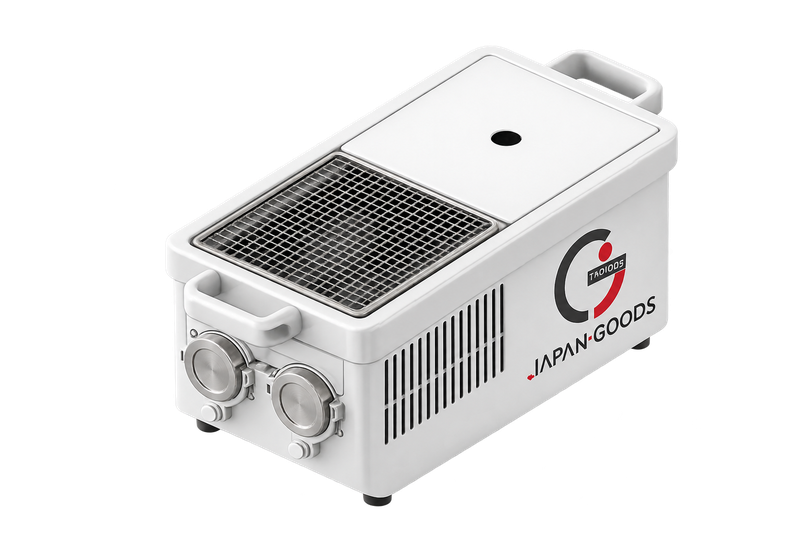 HYDROGEN GRILL / Built-in cartridge model
 Steam-assisted cooking
Cooking that helps retain food moisture
Uses steam produced by hydrogen combustion
Zero CO₂*
Emissions during fuel combustion
*Does not include hydrogen production or transport
Approx. 80 minutes
Estimated burn time per set for the built-in cartridge model
Varies with heat setting and operating conditions
HEAT + STEAM
When hydrogen reacts with oxygen, it produces heat and steam. Using this steam to help keep food from drying out is a key feature of the hydrogen grill's cooking performance.
Steam from combustion surrounds the food and helps reduce moisture loss during grilling. This approach aims to create a browned exterior while retaining the food's moisture.
Hydrogen fuel contains no carbon, and its combustion produces water. Reducing fuel-derived smoke, soot, and odors offers a way to enjoy the natural flavors of food.
No time is needed to light charcoal, and there is no ash to dispose of after use. You can adjust the heat as you cook. Cooling and cleaning the grate and body are still required.
Cooking results vary with the food, heat setting, and cooking method. Zero CO₂ refers only to hydrogen fuel combustion and does not include production or transport. It does not mean that smoke or odors from food fats and other sources will not occur.
| Comparison item | Hydrogen Grill | Canister Gas | Charcoal |
|---|---|---|---|
| Fuel and cooking features | Moisture-retaining cooking using steam from combustion | Heating by gas combustion | Heating with charcoal fire and far-infrared radiation |
| CO₂ during fuel combustion | No emissions | Emissions produced | Emissions produced |
| Preparation before cooking | Prepare compatible fuel and ignite according to the instructions | Fit a compatible gas canister and ignite | Charcoal must be lit |
| After use | Shut down, cool, and clean. No ash disposal needed | Shut down, cool, and clean. No ash disposal needed | Extinguish, cool, clean, and dispose of ash |
Follow each appliance's specifications, site rules, and instruction manual.
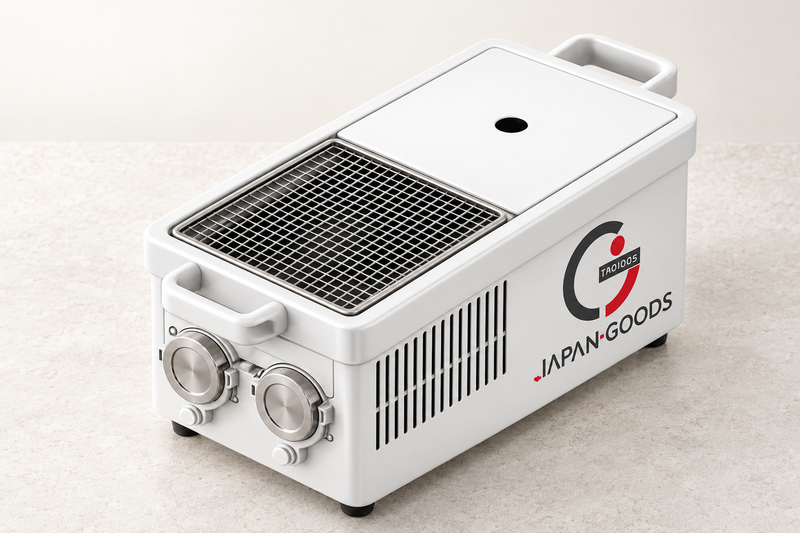
PORTABLE DESIGN / GO
Specifications for the built-in cartridge model. Time varies with heat setting and operating conditions.
View detailed specificationsENERGY FOR YOUR SCENE
Identifying where you need electricity or heat helps clarify the equipment and fuel required. Before introducing a system, consider the appliances, number of people, and duration of use.
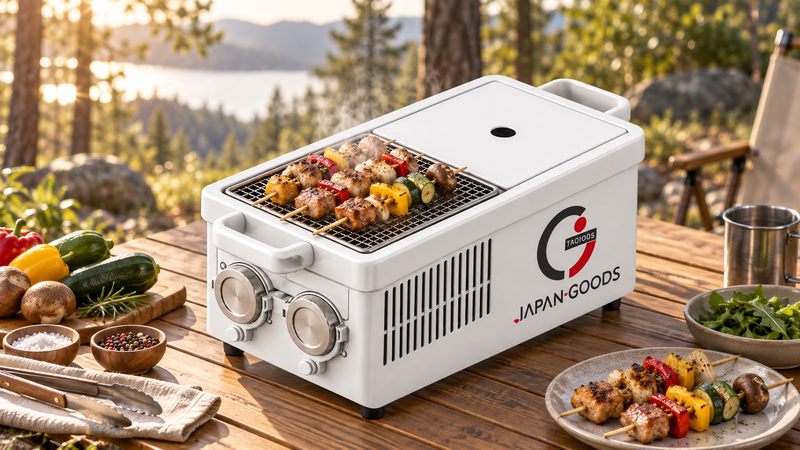
Bring moisture-retaining cooking outdoors with steam from hydrogen combustion. Glamping facilities and similar settings can also offer the flavors of food alongside a new cooking experience.
This appliance uses a flame. Check permitted locations and installation requirements.
An option to consider when electric cooking appliances cannot be used. Alongside food reserves, plan a cooking location and a reliable fuel supply.
Even in emergencies, check ventilation, clearance from surroundings, and fire extinguishing arrangements.
Use a heat source that requires no charcoal lighting or ash disposal for event demonstrations and dining experiences at facilities. Consider operation based on reduced fuel-derived smoke and soot, and the ease of refilling and management.
Whether extended operation is possible depends on fuel supply and equipment conditions.
GO OR LINK
Both grills use hydrogen fuel. The built-in cartridge and external supply models require different equipment and connection arrangements.
CARTRIDGE-INTEGRATED
HGG02 / Built-in Cartridge Model
Carry the cartridges together with the grill body. When planning cooking away from your base, consider both the number of cartridges needed and how to transport them.
EXTERNAL HYDROGEN SUPPLY
HGL01 / External Hydrogen Supply Model
Designed to be paired with an external supply. Check the required supply volume, piping and connectors, and management arrangements for the location and frequency of use.
These diagrams illustrate supply configurations, not connection or operating procedures. Confirm current GO / LINK specifications and included accessories when arranging installation.
FUEL & CONTINUITY
Along with the equipment, establish arrangements for compatible cartridge supply, inspections, and storage. Choose a sustainable approach based on frequency and location of use.
Check compatibility between cartridges and equipment, and prepare the required quantity.
Connect and use according to the instructions. Keep track of used and filled cartridges to prepare for the next use.
Arrange for your cartridge to be inspected, refilled and returned, and continue proper storage. Check the turnaround time in advance.
Service availability and conditions depend on your region and product compatibility. Do not disassemble, modify, or fill cartridges using unverified equipment. Follow the official guidance.
A COMPLETE PREPAREDNESS PLAN
Power to keep communications and lighting available, and heat to prepare meals. Ready-to-eat staples and hygiene supplies also have their roles. Combine the supplies you need for each purpose.
SPECIFICATIONS
Check product specifications and compatibility with your operating environment. Contact us about pricing, stock, lead times, accessories, and supply conditions.
BEFORE YOU USE
Hydrogen equipment has product-specific requirements. Check ventilation, surroundings, compatible supply sources, connectors, and inspection procedures in the official specifications and instruction manual. Contact us about storage and transport conditions as well.
Learn about cartridge operation and handlingQUESTIONS BEFORE INTRODUCTION
GO (HGG02) houses two hydrogen cartridges inside the body. LINK (HGL01) connects to an external hydrogen source and has no built-in cartridges. They differ in portability and supply equipment configuration.
The built-in cartridge model provides approximately 80 minutes per set of cartridges. This varies with heat setting, ambient temperature, and usage. LINK depends on the specifications and volume of the external supply, so contact us with your intended cooking duration and menu.
This page does not recommend indoor or in-tent use. As the product uses a flame, follow the official instruction manual and site conditions for location, ventilation, and installation.
This product uses hydrogen fuel. Compatibility with commercially available butane gas canisters or similar products is not indicated. Use only supply sources and connectors with officially confirmed compatibility.
After use, shut down according to the official instruction manual and allow it to cool fully before cleaning. We provide guidance on cleanable parts, cartridge handling, storage, and inspections when arranging installation.
Let us know the location, purpose, number of users, operating time, and preferred supply method. We can discuss the choice of GO / LINK, equipment compatibility, and refilling after installation.
LET'S PLAN YOUR ENERGY
Where you will use it, the appliances or cooking involved, and the duration you need.
Talk to us about fuel supply and operation as well as the equipment itself.
Continue to the contact page on the JPGOODS corporate website.
Product labels and original test-report images may contain Japanese. English explanations are provided on this page.